
www.intralogisticsmag.com
01
'26
Written on Modified on
Automated storage improves warehouse performance
Kardex enabled WEG Electric Corp. to deploy an AutoStore system at its U.S. headquarters, increasing picking speed and optimizing storage within existing space.
www.kardex.com
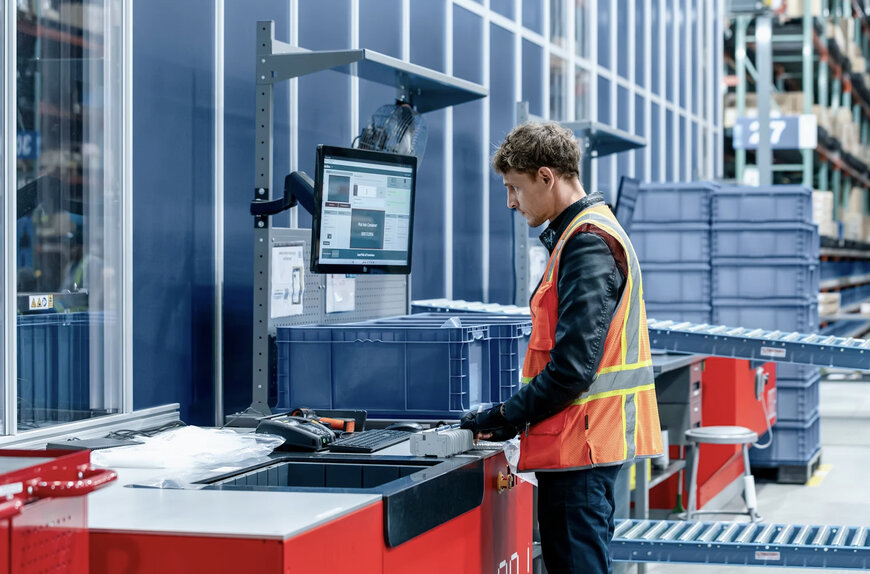
WEG Electric Corp. operates across North America with a growing portfolio of industrial electrical products. As order volumes increased, the company’s warehouse at its headquarters in Duluth began to experience operational constraints, particularly in handling small-parts inventory.
The facility faced pressure on storage capacity, inventory accuracy, and order fulfillment speed. Rather than expanding the building, WEG aimed to improve internal processes by increasing storage density and reducing manual handling while maintaining flexibility for future growth.
Solution: Kardex deploys goods-to-person automation
To meet these requirements, WEG partnered with Kardex to implement an AutoStore automated storage and retrieval system, integrated with Kardex FulfillX warehouse execution software.
The system reorganises small-parts inventory into a compact, high-density grid. Autonomous robots retrieve bins and deliver them directly to operator workstations, transforming the picking process into a goods-to-person workflow. This approach removes the need for operators to travel through the warehouse, reducing handling time and improving process consistency.
Kardex supported the deployment by integrating the system into existing operations and aligning workflows with automation requirements, ensuring a smooth transition without disrupting ongoing distribution activities.
Technical rationale for selection
The solution was selected because it addressed multiple operational challenges simultaneously. By significantly increasing storage density, the system allowed WEG to utilise its existing warehouse footprint more effectively. At the same time, automation of bin retrieval reduced dependency on manual picking, improving both speed and accuracy.
The integration of warehouse execution software provided real-time inventory visibility, enabling better control over stock levels and order processing. In addition, the modular architecture ensures that the system can evolve alongside business growth, allowing incremental expansion without major structural changes.
Results: Higher productivity and improved space utilisation
Following implementation, WEG achieved a substantial improvement in warehouse performance. Small-parts picking speed doubled, reflecting the efficiency of the goods-to-person model. At the same time, the consolidation of inventory freed up valuable floor space, which could then be used for palletised goods and other materials.
Inventory visibility improved through system integration, supporting more accurate stock management and order fulfilment. The automation of repetitive picking tasks also enabled a reallocation of labour, allowing employees to focus on higher-value operational activities.
Operational impact and scalability
The AutoStore system has become a core element of WEG’s distribution operations, supporting increasing order volumes while maintaining consistent service levels. Its scalability ensures that additional robots, workstations, or storage capacity can be introduced as required, without interrupting existing workflows.
Conclusion
The collaboration with Kardex demonstrates how targeted warehouse automation can resolve space and efficiency constraints without facility expansion. By combining high-density storage with goods-to-person workflows, WEG has improved productivity, optimised resource utilisation, and established a scalable logistics platform for continued growth.
Edited by an industrial journalist Sucithra Mani with AI assistance.
www.kardex.com
