
www.intralogisticsmag.com
19
'26
Written on Modified on
BlueBotics introduces hybrid navigation for mobile robots
New navigation function aims to combine structured vehicle routing with dynamic obstacle avoidance to improve efficiency in automated intralogistics environments.
www.bluebotics.com
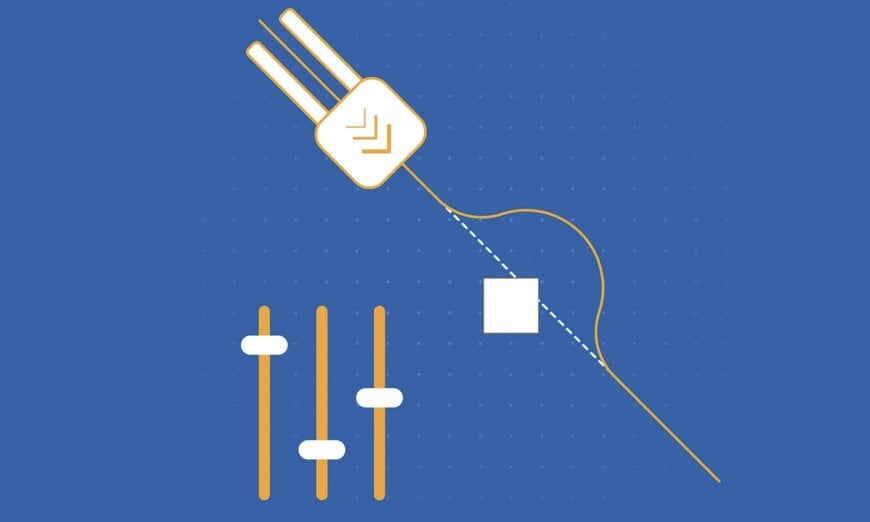
Mobile robots in manufacturing and intralogistics environments must balance predictable routing with the flexibility to handle unexpected obstacles. Addressing this operational challenge, BlueBotics has introduced SmartPass as a new navigation function within its ANT software suite for AGVs and AMRs.
Combining virtual path navigation with dynamic obstacle avoidance
SmartPass is designed for automated guided vehicles (AGVs) and autonomous mobile robots (AMRs) operating in industrial facilities such as warehouses, production plants and logistics centres. The technology combines fixed virtual path navigation with controlled obstacle avoidance to maintain predictable vehicle behaviour while allowing limited route deviations.
In conventional deployments, AGVs typically stop and request operator intervention when paths are blocked, which can interrupt material flow. AMRs, by contrast, may dynamically reroute without strict constraints, which can increase the risk of traffic conflicts in dense fleet environments.
The SmartPass function is intended to operate between these two approaches by allowing vehicles to remain on predefined routes under normal conditions while enabling controlled avoidance manoeuvres when obstacles are detected.
Integration with fleet traffic management systems
The SmartPass capability is integrated into BlueBotics’ ANT navigation platform and operates within the existing ANT server fleet management framework. This allows obstacle avoidance decisions to remain subject to the same traffic management rules governing the rest of the vehicle fleet.
This approach is intended to reduce the likelihood of traffic conflicts by ensuring avoidance manoeuvres only occur when they do not interfere with other vehicles. The system also restricts vehicles from navigating around other robots, a known source of congestion in multi-robot environments.
Such coordination is particularly relevant in intralogistics systems where multiple vehicles share narrow transport corridors and predictable traffic orchestration is required to maintain throughput.
Movement behaviour designed for predictable flow
Vehicles equipped with SmartPass are configured to deviate from their virtual routes only within predefined limits and to return to the original path once an obstacle is cleared. Route deviations are calculated to follow the shortest available bypass within configured boundaries.
The navigation behaviour also allows vehicles to maintain higher travel speeds and defined acceleration profiles during normal operation, switching to more reactive motion behaviour only when avoidance is required.
Operational tasks such as fork movements or machine communication can also be executed during avoidance manoeuvres instead of sequentially, which can reduce handling cycle times. To maintain positioning accuracy, avoidance behaviour is restricted near pick-and-drop locations.
Configurable parameters for site-specific deployment
The SmartPass functionality can be configured according to site layout and operational requirements. Adjustable parameters include the maximum permitted distance from a virtual path, zones where obstacle avoidance is disabled, and vehicle-specific safety distances for stopping near obstacles.
This level of configuration allows the navigation behaviour to be adapted to different facility layouts and safety concepts while maintaining compatibility with the broader mobile robot fleet management system.
Availability within the ANT navigation ecosystem
SmartPass is available for vehicle manufacturers, system integrators and end users deploying AGVs and AMRs based on BlueBotics’ ANT navigation technology and managed through the ANT server fleet management platform.
The development reflects ongoing efforts within mobile robot navigation to improve the balance between predictable traffic management and flexible navigation behaviour in automated material handling systems.
Edited by industrial journalist, Aishwarya Mambet, with AI-assistance.
www.bluebotics.com
