
www.intralogisticsmag.com
29
'25
Written on Modified on
Micro Warehousing and Urban Logistics Acceleration
How Mecalux frames compact distribution hubs for e-commerce and last-mile fulfilment.
www.mecalux.com
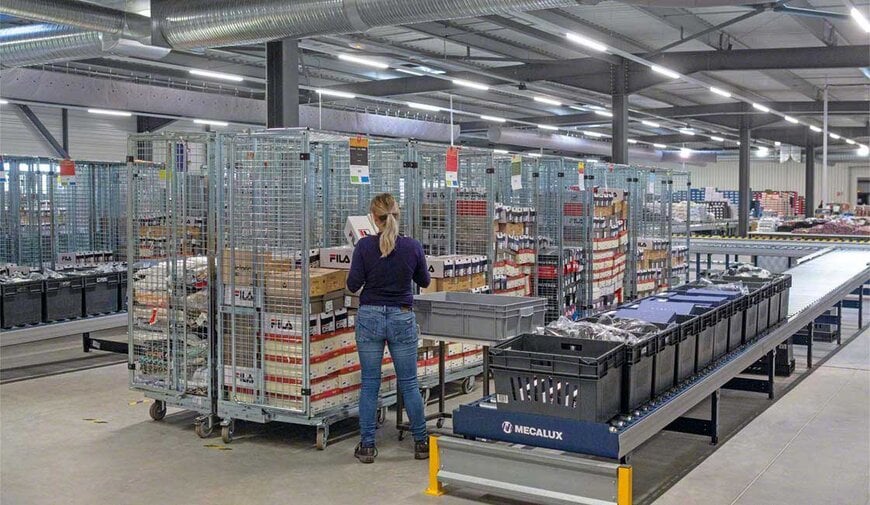
Micro warehousing refers to the deployment of small, strategically located distribution facilities that bring inventory closer to end customers to support rapid delivery and agile logistics. In the context of ecommerce growth and tightening delivery expectations, companies are increasingly adopting these compact logistics nodes to reduce lead times and transportation costs in metropolitan supply chains. Mecalux, a provider of storage systems and warehouse software, outlines the structure, operational characteristics and application contexts of micro warehouses and their role in modern logistics networks.
Urban Supply Chain Challenges and the Case for Micro Warehousing
The rise of micro warehouse facilities is driven by ecommerce-induced demand for faster fulfilment and shortened last-mile transit. Traditional large warehouses, often located outside urban cores, increase transport latency and costs for local deliveries. By contrast, micro warehouses — also termed micro hubs or micro-distribution centres — are small-footprint logistics sites positioned within dense cities or near key customer clusters. Their proximity supports same-day or near-instant delivery promises while mitigating route length and transport expenses.
A typical micro warehousing site operates with limited inventory calibrated for high-rotation stock and replenished frequently from larger regional hubs or central warehouses to maintain availability. These sites may occupy urban property types such as converted retail spaces, ground-floor units or structured parking facilities, and focus on rapid order picking rather than long-term storage.
Operational Design and Inventory Flow
Micro warehousing facility layouts are engineered to maximise throughput within constrained space. Key internal zones include compact receiving areas that manage light inbound flows, high-density storage configured for efficient picking, and adjacent shipping zones that expedite carrier handoffs. Systems for storage may integrate light-duty picking shelves or pallet racking for limited SKU volumes, and in some instances incorporate automated equipment such as stacker cranes to enhance capacity and handling speed within confined quarters.
Effective operation of a distributed micro warehousing network depends on centralised, real-time inventory visibility. Warehouse Management Systems (WMS) aggregate stock levels and locations across all nodes, enabling order assignment to the facility closest to the customer or best positioned to fulfil that order. Distributed Order Management (DOM) systems extend this capability by applying business rules and operational constraints to select the optimal fulfilment point, reducing delivery times and total logistics costs in omnichannel supply chains.
Application Areas and Measurable Benefits
Micro warehousing aligns with several logistics and supply chain strategies where speed and proximity are pivotal. Ecommerce retailers seeking to offer same-day or ultra-fast delivery find that placing inventory near dense customer bases materially reduces last-mile transit times and can improve on-time delivery performance without proportionally increasing transport costs. Supermarkets and fresh food distributors use micro hubs to support stringent freshness and delivery time windows, particularly in urban markets. High-rotation retail categories — including apparel, consumer electronics, and cosmetics — also benefit from stocking popular SKUs in urban micro warehouses to sustain availability.
Quantifiable impacts of a micro warehousing strategy include shortened delivery routes, lower average cost per order, and improved customer responsiveness. By decentralising inventory in proximity to end customers, organisations can shorten lead times from days to hours, an outcome valued in same-day and rapid delivery business models. Decentralised stock staging can also reduce overall transport emissions through shorter delivery distances — a measurable benefit for supply chains targeting lower carbon footprints.
Limitations and Management Complexities
Micro warehousing introduces operational complexity due to the need to coordinate multiple small nodes rather than a single large facility. Limited storage capacity necessitates disciplined inventory rotation and replenishment planning to prevent stockouts and overstocking. Urban real estate costs also elevate facility occupancy expenses, pressuring operators to optimise spatial utilisation and throughput rates. Maintaining consistent, error-free operations across a network of compact sites demands reliable software infrastructure for inventory control, order routing and performance monitoring.
Position in the Broader Logistics Ecosystem
Micro warehousing represents a structural shift toward decentralised fulfilment within the broader logistics ecosystem. It complements traditional warehousing and omnichannel distribution models by addressing specific last-mile challenges and enabling supply chains to meet fast delivery service levels without the inefficiencies associated with large, remote hubs. Where customer density and order volumes justify local stock staging, micro warehousing can integrate with existing logistics networks to enhance responsiveness and operational efficiency.
This narrative situates micro warehousing within evolving supply chain practices, emphasising measurable logistical outcomes and the technological mechanisms — such as WMS and DOM systems — that support its deployment.
www.mecalux.com
