
www.intralogisticsmag.com
24
'26
Written on Modified on
STILL presents autonomous dock and warehouse automation
Demonstrations at LogiMAT 2026 include modular robotics, interoperable fleets and automated order-picking workflows for warehouse operations.
www.still.fr
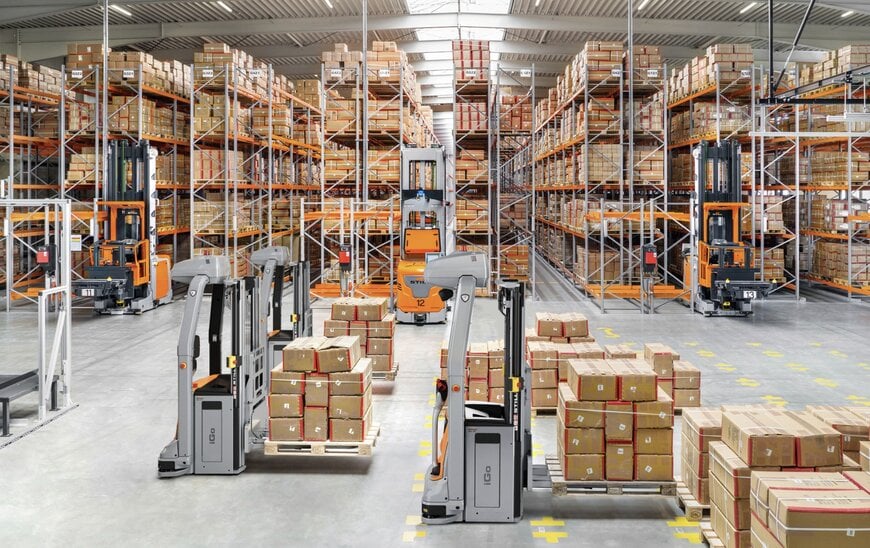
Handling goods at loading docks and inside warehouses requires coordinated movement between vehicles, storage systems and operators. From 24–26 March 2026 at LogiMAT in Stuttgart (Hall 10, Stand B40), STILL will present automation technologies ranging from individual task automation to fully integrated intralogistics control.
Automating the receiving and shipping zone
A new autonomous solution designed for truck loading and unloading operations will be demonstrated live. The system manages goods flow between receiving and shipping areas, including distribution of axle load during handling.
Dock areas often experience unpredictable peaks in volume and simultaneous processing of multiple shipments. By automating repetitive handling tasks, personnel can focus on inspection, documentation and process monitoring rather than physical transfer operations.
Modular entry into warehouse automation
STILL will also show its iGo automation approach, which allows gradual deployment of automated processes. Instead of requiring complete system redesign, individual transport steps can be automated using a small number of vehicles.
This method supports phased adoption: companies can begin with isolated automation tasks and later connect them into a broader workflow. The concept suits facilities where investment or operational constraints prevent immediate full digital supply chain integration.
Coordinating heterogeneous fleets
For larger installations, STILL demonstrates integration of multiple automated technologies within one control environment. The system coordinates forklifts, autonomous mobile robots (AMRs), storage equipment and collaborative robots while exchanging data with warehouse management and fleet management software.
Standardised communication via VDA 5050 enables interoperability between different vehicle types and suppliers. The result is a workflow that adapts dynamically to changing priorities, such as order urgency or dock congestion.
Bin-to-Person order picking
The portfolio also includes a Bin-to-Person (B2P) picking method. Containers are transported automatically to workstations, where operators select required items without travelling through storage aisles.
The approach reduces walking distances and handling time while lowering picking errors in order fulfilment operations. Autonomous transport vehicles deliver containers to stations within a coordinated system architecture.
Demonstrating connected intralogistics workflows
Two live scenarios at the exhibition show interaction between software orchestration, artificial intelligence functions and standard interfaces. These demonstrations illustrate how interconnected automation can reduce operating costs and improve responsiveness in complex warehouse environments.
By combining modular deployment with system-wide coordination, the presented solutions address both incremental automation projects and fully integrated intralogistics ecosystems.
www.still.com
