
www.intralogisticsmag.com
03
'26
Written on Modified on
Beckhoff at LogiMAT 2026
From March 24 to 26, in Stuttgart, the company will present its future-proof technologies for open and flexible control of the flow of goods.
www.beckhoff.com
Modern distribution centers face a mounting contradiction: the need for higher throughput coupled with the demand for radical system flexibility. While traditional automation often relies on rigid, centralized architectures, Beckhoff is utilizing LogiMAT 2026 to demonstrate how PC-based control and artificial intelligence provide a distinct competitive advantage through end-to-end networking. By moving away from proprietary, closed systems, the technology showcased in Hall 3, Stand 3C20 allows logistics providers to rethink the flow of goods and data as a single, cohesive ecosystem.
Decentralized Control as a Competitive Edge
A primary differentiator in Beckhoff’s approach is the elimination of the conventional control cabinet through the MX-System. In a sector where floor space and installation speed are critical, this pluggable, decentralized solution allows for automation to be mounted directly onto the machine or conveyor frame. This architecture significantly reduces cable lengths and maintenance overhead compared to standard centralized setups. For high-volume warehouses, the integration of smart diagnostics via Bluetooth® provides a level of transparency that traditional systems lack, ensuring that faults are detected and rectified before they lead to costly system-wide downtime.
Accelerating the Engineering Lifecycle with AI
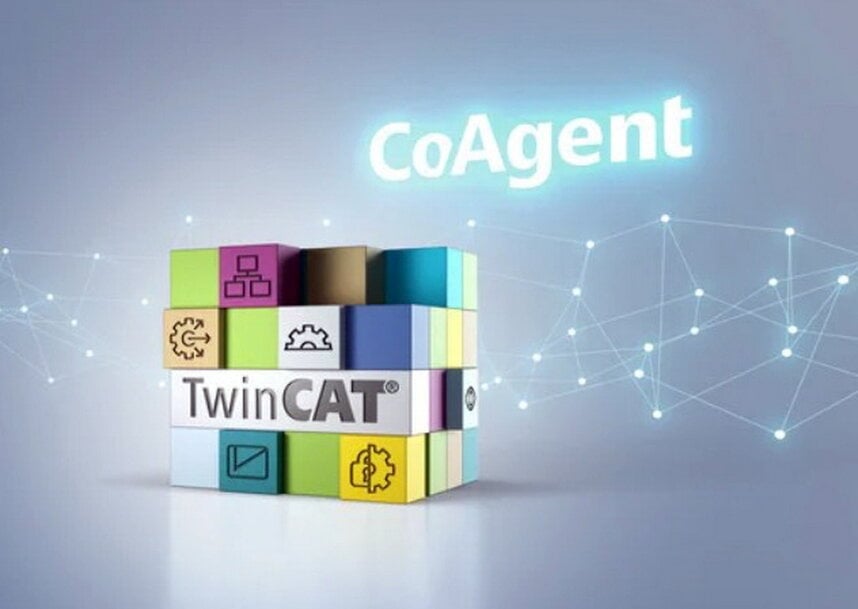
The integration of TwinCAT 3 CoAgent represents a shift toward AI-supported productivity that addresses the labor shortage in technical engineering. Unlike standard automation software, this AI assistant provides language-based code suggestions and automated configurations for PLCs and HMIs. This reduces the project planning phase for complex warehouse environments and extends its utility into live operations. By generating automated repair instructions and conducting real-time data analysis, the system transforms the role of the operator from manual troubleshooting to high-level process management, ensuring a sustainable reduction in mean time to repair.
Performance-Driven Cost Optimization in Motion
For motion sequences in conveyor and handling technology, the challenge lies in balancing high dynamics with cost-efficiency. Beckhoff addresses this through a specific economy drive line-up including the AX1000 servo drives and AF1000 variable frequency drives. These compact components are engineered to provide precise control without the unnecessary complexity or cost of over-specified hardware. Paired with the AM1000 servomotors, which cover a power range of up to 1,700 W, this drive technology offers a scalable and cost-optimized solution for logistics companies that require high performance and quality within a streamlined budget.
www.beckhoff.com
