
www.intralogisticsmag.com
27
'25
Written on Modified on
AI Adoption Surges as Smart Warehouses Transform Global Logistics
MIT–Mecalux research reveals widespread AI-driven warehouse automation with fast ROI, rising high-skill roles and strong global expansion plans.
www.mecalux.com
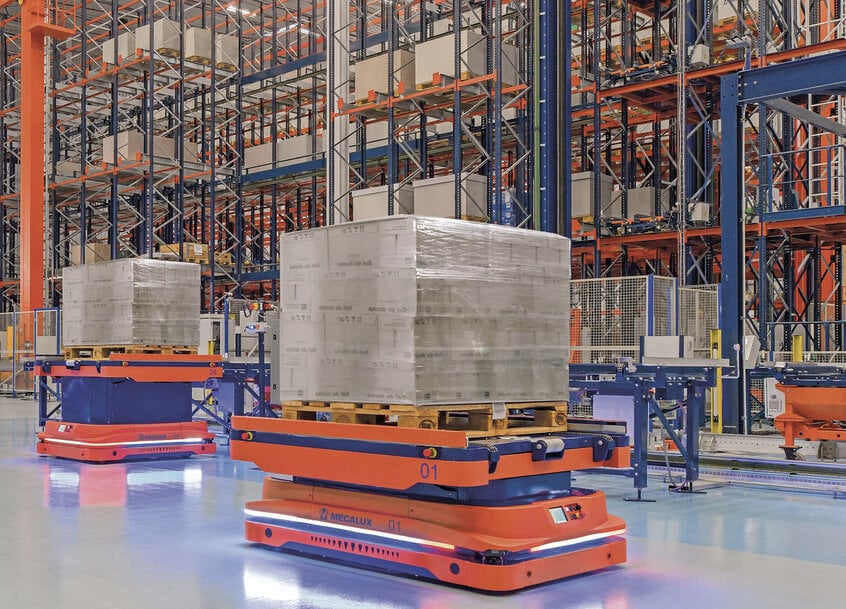
In retail, e-commerce, and global logistics, warehouses increasingly rely on artificial intelligence and machine learning to support order surges, streamline inventory flows, and maintain accuracy across complex supply chains. A new study from Mecalux and the MIT Intelligent Logistics Systems (ILS) Lab at MIT’s Center for Transportation and Logistics offers one of the most detailed snapshots of this shift, based on responses from more than 2,000 warehousing and supply-chain professionals across 21 countries.
A Mature Stage of Intelligent Warehouse Adoption
The findings show that artificial intelligence, once used mainly in controlled pilots, has become a core element of warehouse management. More than 90% of surveyed facilities now use AI or advanced automation to support daily operations such as order picking, inventory optimisation, equipment maintenance, labour planning and safety monitoring. Over half classify their operations as advanced or fully automated—an indicator of widespread maturity rather than early experimentation, particularly in businesses managing multi-site distribution networks.
These adoption levels align with established engineering expectations. Modern warehouse management systems and automation platforms are technically capable of integrating machine-learning models into routine tasks, provided they are supported by adequate data flow, device connectivity, and process consistency.
Economic Returns and Budget Commitment
The study reports that companies dedicating between 11% and 30% of their warehouse technology budgets to AI are seeing returns within two to three years. Such payback windows are realistic for deployments that deliver measurable improvements in inventory accuracy, throughput and labour efficiency. The trend also reflects a pivot from exploratory funding to longer-term capability building, driven by cost optimisation, customer expectations, workforce shortages, sustainability initiatives and competitive pressure.
Integration Remains the Hardest Phase
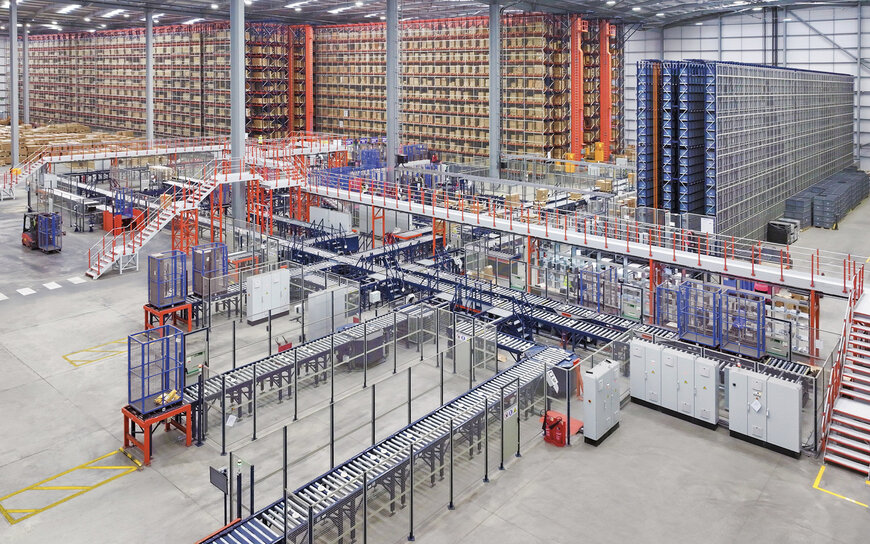
Despite overall progress, scaling AI across an entire logistics network still poses challenges. The main obstacles involve technical expertise, system integration, data quality and implementation costs. These barriers mirror known constraints in industrial environments, where legacy systems often limit seamless adoption of advanced analytics. At the same time, companies report having strong foundations in data management and structured project delivery, and they identify clearer roadmaps, improved tools, larger budgets and in-house expertise as the main accelerators for further deployment.
AI’s Impact on the Workforce
The research also addresses a long-standing concern: whether automation reduces the need for warehouse labour. Survey responses suggest that AI is supporting, rather than replacing, workers. Most organisations observed increases in employee productivity and job satisfaction, while more than half expanded their workforce after adopting AI. New roles—such as automation specialists, data scientists and AI/ML engineers—are becoming standard in facilities that rely on intelligent systems.
Generative AI Becomes the Next Strategic Layer
Looking forward, nearly every surveyed company plans to expand its AI deployment within the next two to three years, with 87% expecting to increase related budgets. The study highlights a growing focus on decision-making technologies, particularly generative AI. Businesses identify generative AI as the most valuable method currently entering logistics environments, with applications ranging from automated documentation and warehouse-layout optimisation to process-flow design and code generation for automation systems. These use cases are technically valid, as generative models can create structured outputs, analyse operational constraints and assist in engineering routine software tasks.
A Sector Moving Toward Intelligent, Data-Driven Operations
With Black Friday and other peak retail cycles approaching, the study concludes that warehouses are not only becoming more automated but also increasingly intelligent. AI is reinforcing performance, supporting the workforce, and enabling more sophisticated decision-making across global supply chain networks. The next few years are expected to deepen this integration as data and automation converge into the core of warehouse operations.
