
www.intralogisticsmag.com
09
'26
Written on Modified on
VisionNav Robotics Launches VNE40-66 Counterbalance AGV for Heavy-Duty Autonomous Stacking
Native AGV architecture combines a 4-ton payload, 4.5-meter lift height and autonomous navigation for demanding warehouse and industrial applications.
www.visionnav.com
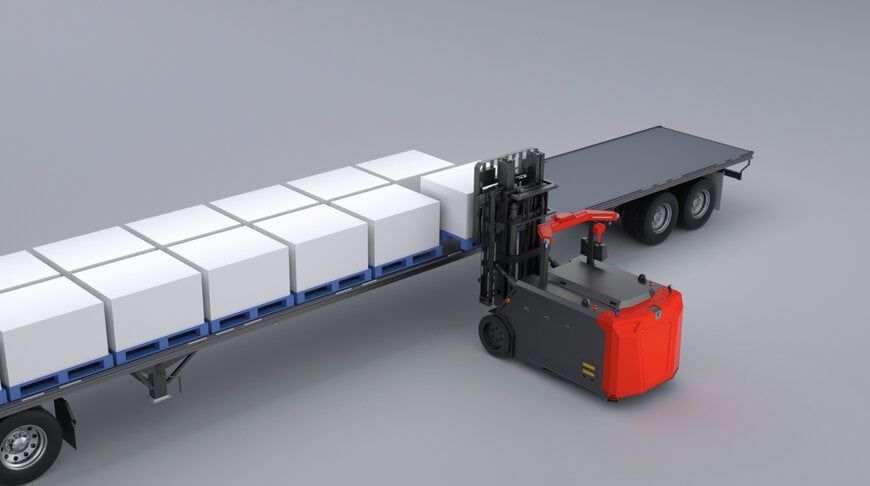
VisionNav Robotics introduces the VNE40-66, a counterbalance automated guided vehicle engineered from the ground up for high-capacity warehouse operations. This autonomous platform executes structural lifting and transportation for heavy manufacturing, bulk warehousing, new energy, and automotive components distribution centers.
Native Autonomous Architecture Versus Retrofit Conversions
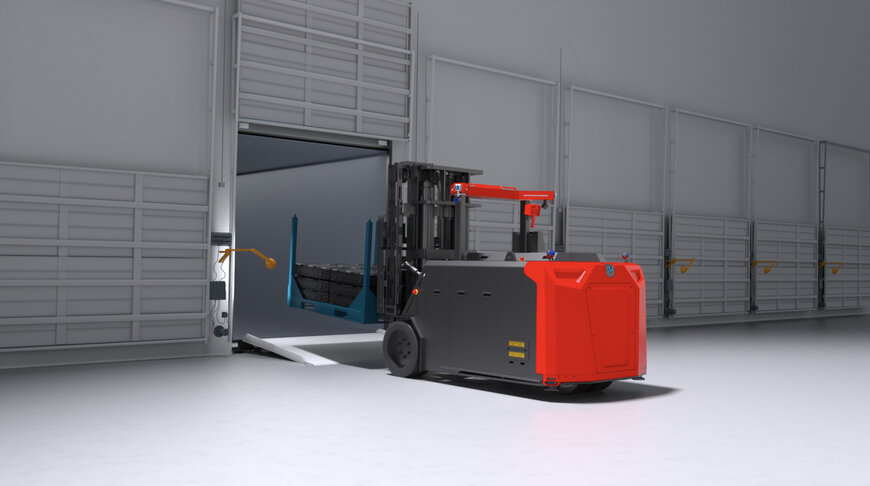
Historically, automating high-bay heavy-load stacking operations involved converting standard manual forklifts into automated guided vehicles. Because these vehicles were originally engineered for manual operation, retrofitted systems experience reduced overall reliability, wiring redundancy, and signal interference. The VNE40-66 platform replaces these conversion methods with a native autonomous architecture. Every mechanical component, including the chassis, counterweight distribution, drive system, and perception hardware, is integrated specifically for continuous unmanned operation. This tightly coupled hardware and software framework simplifies maintenance routines, allowing technical personnel to service or replace core components without disassembling retrofit equipment, thereby reducing structural downtime and increasing overall fleet utilization.
Hydraulic Payload Capacity and Multi-Sensor Positioning
Conventional converted vehicles often suffer from declining positioning accuracy and chassis instability when lifting loads above 2.5 tons beyond 3 meters due to shifting centers of gravity. The VNE40-66 overcomes this structural limitation utilizing a reinforced counterbalance chassis, a high-flow hydraulic system, and a heavy-duty mast that is rigidly integrated into the vehicle frame. These mechanical specifications enable the system to handle a rated load capacity of 4,000 kilograms. An adjustable mast tilt ranging from -6 degrees to +6 degrees ensures precise fork positioning during rack storage and retrieval. Driven by multi-sensor fusion technology, the platform maintains millimeter-level placement accuracy while lifting fully loaded pallets to maximum lift heights of 4.5 meters. These control mechanisms significantly reduce the risk of load shifting and vehicle tipping under heavy payloads.
Integration Within the Automotive Data Ecosystem
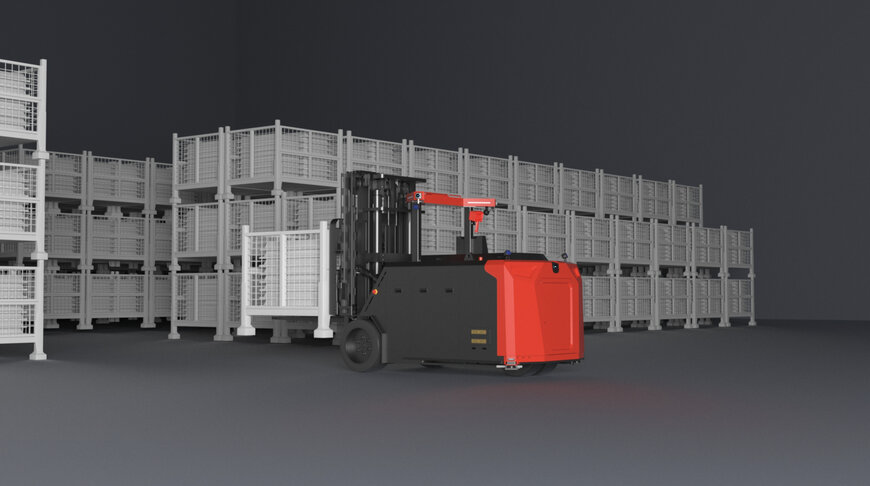
Automating heavy-load transportation requires precise physical execution within complex logistics networks. Deploying this counterbalance platform provides a repeatable and scalable process for demanding facilities, including new energy material warehouses, steel storage environments, and bulk raw material logistics centers. By integrating an autonomous 4-ton load capacity and 4.5-meter lift height directly into the automotive data ecosystem, operators maximize vertical storage capacity and mitigate the collision risks and physical infrastructure damage associated with manual forklift stacking.
Additional Context:
This section details technical specifications and competitive benchmarking not included in the original product announcement
Within the heavy-duty autonomous material handling market, 4,000-kilogram capacity vehicles represent a specific engineering discipline distinct from standard light-duty mobile robotics. Traditional electric counterbalance platforms, such as the Toyota Traigo 80 series, are engineered with a 4,000-kilogram load capacity and a top manual driving speed of 20 kilometers per hour. However, retrofitting standard manual forklifts into automated guided vehicles often results in compromised center-of-gravity metrics and payload derating at extended lift heights. By utilizing a native autonomous architecture instead of a manual conversion, purpose-built heavy-duty platforms maintain exact load distribution and integrated sensor configurations without the wiring redundancy that limits the efficiency of retrofit designs.
Edited by Natania Lyngdoh, Induportals editor, assisted by AI.
www.visionnav.com
