
www.intralogisticsmag.com
20
'26
Written on Modified on
Managing warehouse stock relocations without disrupting daily operations
Materials handling specialists Pallet Truck Shop outline how careful planning, manual handling equipment, and strict safety protocols keep orders moving during internal reorganisations and site moves.
www.pallettruckshop.co.uk
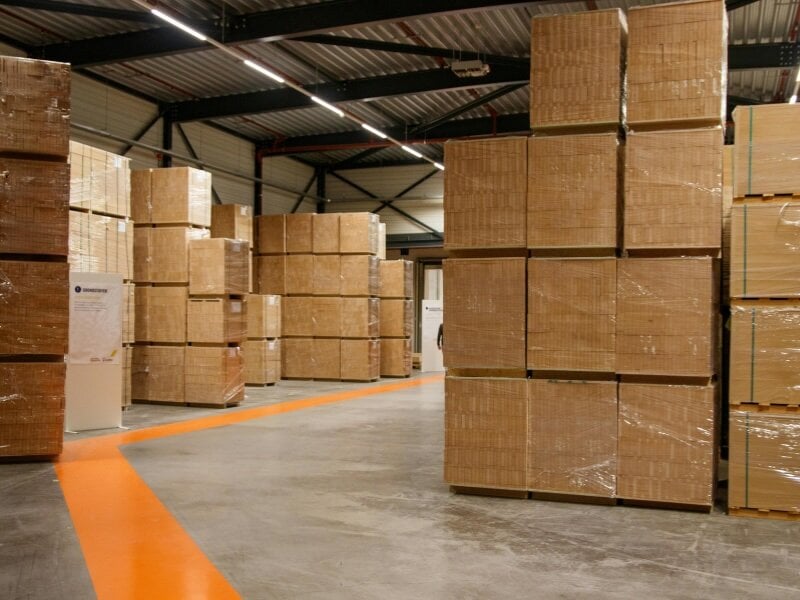
Relocating large volumes of warehouse inventory—whether moving to entirely new premises or reorganising an existing floorplan—involves far more complexity than simply loading a lorry. According to materials handling specialists Pallet Truck Shop, successfully shifting stock while customer orders continue to leave the building requires careful planning, the right handling equipment, and a clear strategy to protect everyday operations.
Planning for layout changes and temporary storage
Internal layout adjustments can prove nearly as disruptive as a full facility relocation. Relocating fast-selling lines closer to the dispatch area, clearing room for a new racking run, or consolidating two storage zones all require lifting, carrying, and repositioning active inventory.
Temporary storage also demands structured preparation, ranging from marking out dedicated floor space for overflow stock to determining which product lines must remain immediately accessible while the remainder is packed away or moved.
Equipping teams with manual handling tools
Manual handling equipment—including pallet trucks, stackers, and lift tables—almost always serves as the operational backbone of internal relocations and temporary storage setups. These tools are particularly well suited to short, flexible movements in confined spaces, such as clearing a single aisle or repositioning a small group of pallets.
Phil Chesworth, Managing Director of Pallet Truck Shop, noted that businesses frequently focus on the major elements of a warehouse move, such as racking, transport vehicles, and schedules, while overlooking how much of the actual workload is carried out pallet by pallet using a standard pallet truck. He added that having the appropriate handling equipment ready before the first pallet is shifted reduces project stress and makes it much easier to safeguard day-to-day fulfilment.
Maintaining safety amidst temporary floor arrangements
Safety must remain a primary focus throughout any stock relocation. Temporary layouts often introduce unfamiliar travel routes, inventory placed in unusual locations, and higher-than-normal foot traffic on the warehouse floor. To mitigate risks, managers should brief teams thoroughly on layout changes, keep pedestrian walkways clear, and inspect every truck to ensure it is in proper working order before deployment.
Additional Context:
This section explains general principles of warehouse material flow and manual handling ergonomics not included in the original article.
In warehouse logistics, internal reorganisations frequently employ ABC inventory classification—slotting high-turnover "A" items nearest to packing and dispatch bays to reduce travel distances for order pickers. During transitional moves, staging overflow pallets in temporary floor zones requires strict adherence to load-bearing limits and clear line-of-sight rules at aisle intersections to prevent collisions between pedestrians and wheeled equipment.
Manual pallet trucks rely on a compact hydraulic pump actuated by the operator's tiller handle to raise the forks just a few centimetres off the floor, transferring the load onto low-rolling-resistance polyurethane or nylon steer and load wheels. Because starting a stationary heavy pallet requires overcoming static rolling friction, ensuring that wheel bearings are clean and properly lubricated reduces the peak push-pull force exerted on workers' lower backs and shoulders during repetitive short-haul relocations.
Edited by an industrial journalist, Lekshman Ramdas, with AI assistance.
www.pallettruckshop.co.uk
